
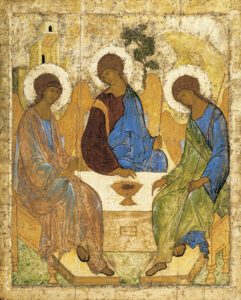
The Trinity by Andrei Rublev (15th century)
“Trinity Sunday”
By Malcolm Guite
In the Beginning, not in time or space,
But in the quick before both space and time,
In Life, in Love, in co-inherent Grace,
In three in one and one in three, in rhyme,
In music, in the whole creation story,
In His own image, His imagination,
The Triune Poet makes us for His glory,
And makes us each the other’s inspiration.
He calls us out of darkness, chaos, chance,
To improvise a music of our own,
To sing the chord that calls us to the dance,
Three notes resounding from a single tone,
To sing the End in whom we all begin;
Our God beyond, beside us and within.
Hope is a tender courageous condition of the heart that runs deeper than mere emotion. Hope involves daring to be present to our deep longings that have yet to be realized. To hope is to risk acknowledging that we have desires that may not be quickly or easily fulfilled. If our hope is placed in that which cannot be assured, it may lead to waves of pain and anguish. Thus, the British expression “it’s not the despair but the hope that kills you.”
Yet if our hope is placed in One whose desire is that our deepest longings be realized, One who created us with those longings: longings to love and be loved safely and securely, longings for our loving relationships to endure, longings to experience the joy of being delighted in and the peace that we have nothing to fear, that all will end well for us; our hope is not vain. Romans 5:1-5 assures us that we can cultivate hope that “will never fail to satisfy our deepest need because the Holy Spirit that was given to us has flooded our hearts with God’s love.” (v.5)
Such hope requires trust in the One who is not bound by the limits of health, wealth, death, or variable mood swings. Unfailing hope requires confidence that our deepest longings will be realized despite the groaning we currently share with all creation and the Holy Spirit (Romans 8:18-28).
Confident trust is the essence of Biblical faith. Hebrews 11:1 helps us see that trust is rooted in proven experience, evidenced in the trustworthiness over time of the person confided in. “Faith is the assurance of things you have hoped for, the absolute conviction that there are realities you’ve never seen.” Trust is not blind, nor can it be conjured by acts of our wills. Trust in God requires genuine experiences of the consistency of His loving character towards us in the most difficult areas of our lives. Hebrews 11:27 informs us that “Moses left Egypt, unafraid of Pharaoh’s wrath and moving forward as though he could see the invisible God” because he had experienced God’s direct providential care in his life. Trust in God, just as in people, grows incrementally over time through repeated experiences in His faithful care. Paul through all the suffering he experienced walking with Jesus came to declare to Timothy, “I know (through experiential relationship) whom I have believed, and am convinced that he is able to guard what I have entrusted to him until that day.” (II Tim. 1:12)
Jesus spoke to those who were struggling to have confidence in Him as the Son of Man to put His words to the test, and that if they did, they would come to experience the validity of His words in the freedom they came to know, freedom from fear of shame, rejection, death…. (John 8:31-32)
Part of the wisdom of the Biblical writers is that trust and hope can be cultivated over time, and with trust and hope comes the deepening experience of God’s love, joy, and peace as the underlying conditions of our lives in the Holy Spirit (Rom. 5:5 & 14:17). Curt Thompson in The Deepest Place masterfully recounts the stories of men and women, who through great suffering, have come to know experientially the hope that Paul so confidently speaks of. They are living witnesses to the reality Jesus spoke of in John 8.
Jesus’s words and deeds planted seeds in my 12-year-old heart and mind that He was someone I could trust to lead me into a life of love, meaning, and purpose. Over the years my trust in His dependable companionship has deepened as I have navigated situations of painful brokenness personally and societally. In January 2005 I experienced enduring hope, and with that hope great joy and peace and love, in the aftermath of the modern era’s most devastating tsunami, claiming the lives of over ¼ million souls. Dear friends from Indonesia and my home fellowship partnered with funding and relief agencies as part of a truly global response, who in partnership with Acehnese survivors, helped them begin to rebuild with hope. I experienced the same human fortitude that August along the Gulf Coast of the United States following hurricane Katrina, and then again in the mountainous regions of Pakistan that October following a massive earthquake.
-
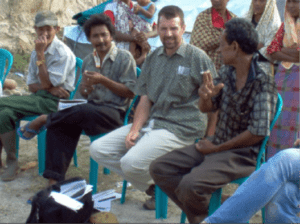
- Villagers gathering outside Aceh, Indonesia (photo by Scott Buresh)
-
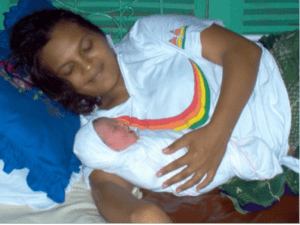
- Baby delivered in Acehnese village following the tsunami (photo by Scott Buresh)
-
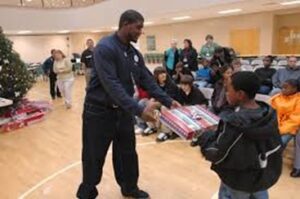
- FEMA representative hands out presents to students following Hurricane Katrina (photo by Mark Wolfe/FEMA)
-

- Village leaders in Pakistan following October 2025 earthquake (photo by Scott Buresh)
The seed of life that God has planted in each of us is resilient, just waiting to be cracked open. David Brooks recently shared that suffering will either break us or break us open revealing something richer and more beautiful than would have been possible otherwise. Bette Dickinson echoed this same theme in a recent Space For God reflection where she shared a series of four paintings to help us apprehend the process of scarification a seed undergoes to release the lifegiving potential within. She invited us to see Jesus’s voluntary death, leading to the triumph of His resurrection and outpouring of Holy Spirit, as the ultimate evidence of the hope God imparts that cannot be overcome. He truly is our archegon, the pioneer of our faith, who has gone before us, overcoming death itself, so that He is now able to enter into our pain and infuse it with resurrection life (Hebrews 2:10).
In recent years one of my great joys has been visiting my daughter Abby and her family in Nashville and volunteering with the men and women of Cul2vate to provide food for the food insecure and a second chance for those who have experienced the pain of substance addiction and incarceration. Their motto is growing food and growing people. I encourage you to visit their website to hear the stories of the cultivators that in community with one another generate life that flows redemptively through them to the hundreds they touch. The breadth of my hope-filled imagination is much greater because of the joy I have experienced preparing beds, planting seeds, pruning and weeding, and harvesting delicious berries and vegetables alongside these precious men and women.
-
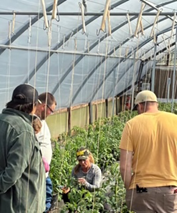
- Cultivators and volunteers (photo by Abby Gant)
-
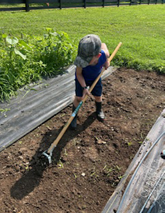
- Abby’s son Briggs volunteering (photo by Abby Gant)
-
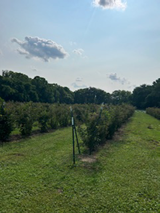
- Blackberries (photo by Abby Gant)
Hope at its core is having the courage to embrace growth, particularly in the midst of pain and suffering. Josef Pieper portrays the virtue of hope as being people on the way, people who are in the process of becoming more and more fully alive in union with Abba, Jesus, Holy Spirit and our brothers and sisters. The prodigal father displays God’s deep desire to restore intimate relational connection between us as the seedbed for our flourishing. He delights in redeeming and restoring that which is broken and lost. The reality of His kingdom reign is that we will never be bored on the New Earth united with Heaven because we will never cease to grow in our awe and wonder at the goodness of God and in our capacity to create and steward the new creation with Him in the unbroken secure company of our brothers and sisters all united in the One who designed this for us from the moment He conceived of us! So take heart dear ones! Though the path leads us through suffering at times The Story Isn’t Over Yet. The best is yet to come!
Two more poems for reflection:
“What the Bird Said Early in the Year”
By C.S. Lewis
I heard in Addison’s Walk a bird sing clear:
This year the summer will come true. This year. This year.
This year time’s nature will no more defeat you.
Nor all the promised moments in their passing cheat you.
This time they will not lead you round and back
To Autumn, one year older, by the well worn track.
“The Anointing at Bethany”
By Malcolm Guite
Come close with Mary, Martha, Lazarus
So close the candles stir with their soft breath
And kindle heart and soul to flame within us
Lit by these mysteries of life and death.
For beauty now begins the final movement
In quietness and intimate encounter
The alabaster jar of precious ointment
Is broken open for the world’s true lover,
The whole room richly fills to feast the senses
With all the yearning such a fragrance brings,
The heart is mourning but the spirit dances,
Here at the very centre of all things,
Here at the meeting place of love and loss
We all foresee, and see beyond the cross.